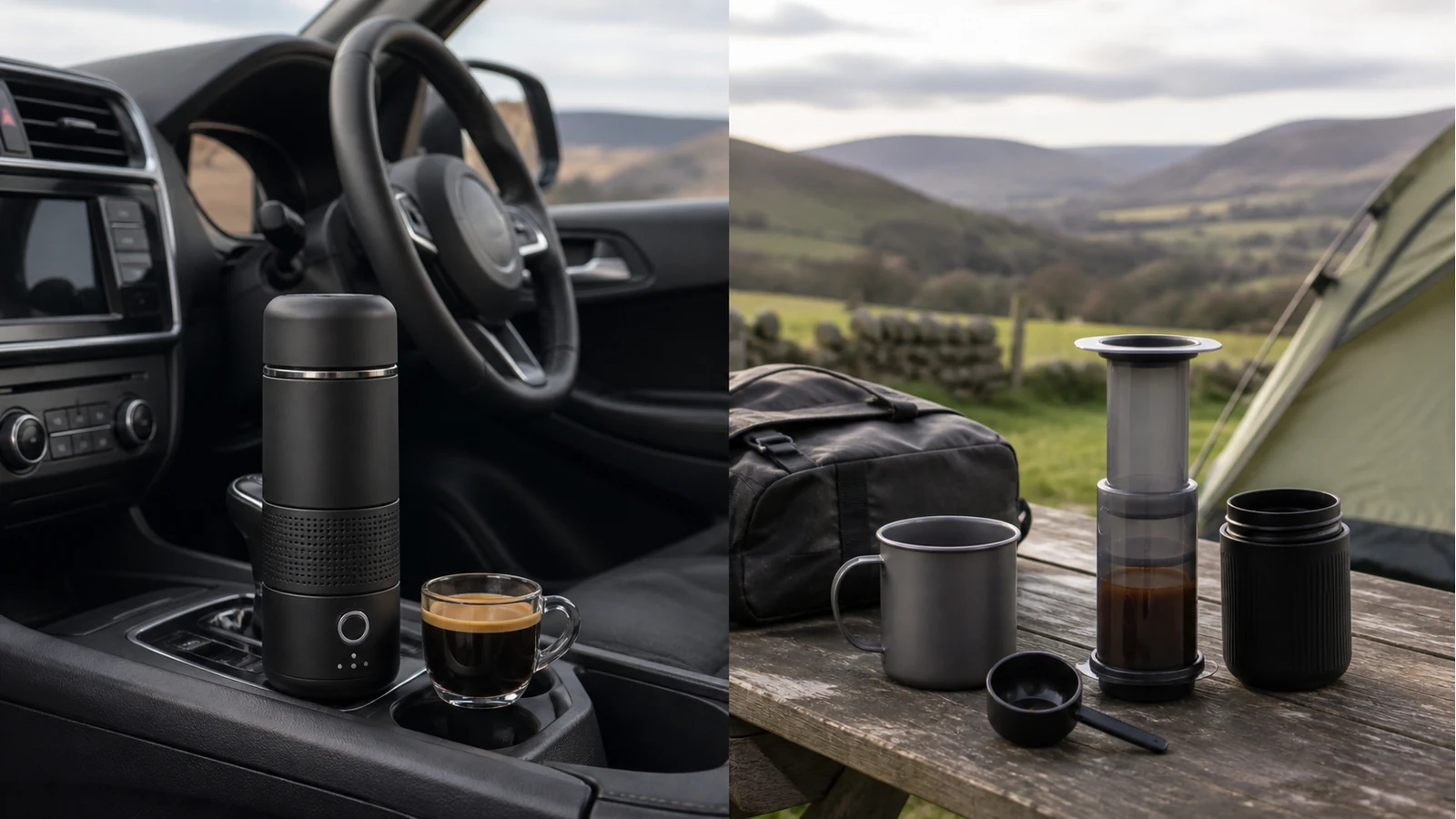
Self Heating Portable Espresso Vs Aeropress Uk
Direct answer: choose a self-heating portable espresso machine when your main problem is having only cold water, a parked car or campervan socket, and a preference for a short espresso-style shot. Choose an AeroPress when you can reliably get hot water and want a lighter, cheaper, battery-free brewer for a longer cup of concentrated coffee.
This is not really a contest between two identical coffee makers. It is a choice between two travel habits. AeroPress-style brewing assumes you have a kettle, stove, flask or café hot-water source. A self-heating unit moves the heat source into the device, so the trade-off becomes battery, waiting time and a smaller drink. UK travel coffee roundups make the same heat-source distinction when separating manual brewers from battery self-heating machines; see Coffee Setup UK on portable brewing choices.
Fast Decision Table
| Trip situation | Better fit | Why |
|---|---|---|
| Hotel room has a kettle | AeroPress | Hot water is already solved, and clean-up is simple. |
| Hotel or work room has no kettle | Self-heating espresso | The machine can heat cold water instead of needing a separate source. |
| Campervan with 12V top-up, no hook-up | Self-heating espresso if you want espresso-style shots | It keeps brewing independent from a large inverter, but you must plan charge and water. |
| Backpack or rail trip with tight luggage | AeroPress | No battery, no charger and less weight. |
| You care most about crema | Self-heating espresso | A pump machine is the more relevant design, though results still depend on capsules, grind and maintenance. |
Heat Source Comes First
AeroPress is practical when the route already includes hot water: campsite stove, office kettle, breakfast bar, flask or self-catering kitchen. Without hot water it becomes an incomplete kit. Self-heating portable espresso is meant for the awkward gap: car parks, basic rooms, campsites and offices where a kettle is not guaranteed.
For a Conqueco-style setup, the frozen product facts used for this campaign state a 50ml capacity, 15-bar pump, cold-water heating of about 7-10 minutes, roughly 3-4 cold-water cups per charge, and far more extractions if pre-boiled water is used. That makes it a short-shot tool, not a replacement for a full mug brewer.
Cup Style and Mess
AeroPress gives a concentrated filter-style coffee that many people dilute into a longer drink. It is flexible, but it does not become true espresso just because the cup is strong. A battery pump machine is closer to the espresso habit: smaller volume, pressure-led extraction and capsule convenience when you want less mess.
If you use ground coffee in either device, expect more clean-up. Capsules reduce loose grounds in a car, hotel room or wet campsite, but they add packaging and lock you into compatible capsule formats. If you want both choices in one travel kit, look for a machine that accepts NS Original-style capsules and a reusable ground basket.
Who Should Not Buy a Self-Heater?
- Do not buy one if you mainly want a large breakfast mug.
- Do not buy one if you hike light and cannot justify a battery appliance.
- Do not buy one if an eight-minute cold-start wait will annoy you every morning.
- Do not buy one if you cannot keep the device charged before travel.
When Conqueco Becomes Relevant
If your actual use case is cold water, parked vehicle breaks, campervan mornings or hotel rooms without a kettle, the product facts for Conqueco portable espresso machine match that self-heating branch: 12V car charging, UK plug charging, NS Original-style capsule use and a ground basket. If hot water is always available, an AeroPress may remain the cleaner and simpler answer.
FAQ
Does AeroPress make espresso?
No. Treat it as concentrated coffee. It can be excellent, but it is not the same mechanism as a pump espresso machine.
Is a self-heating machine quicker?
Only if hot water is not already available. From cold water, plan for a multi-minute heat wait.
Which is better for two people camping?
AeroPress is easier if you already boil water for breakfast. A self-heating espresso machine can work if both people are happy with small shots and you plan charge, rinse water and capsules.